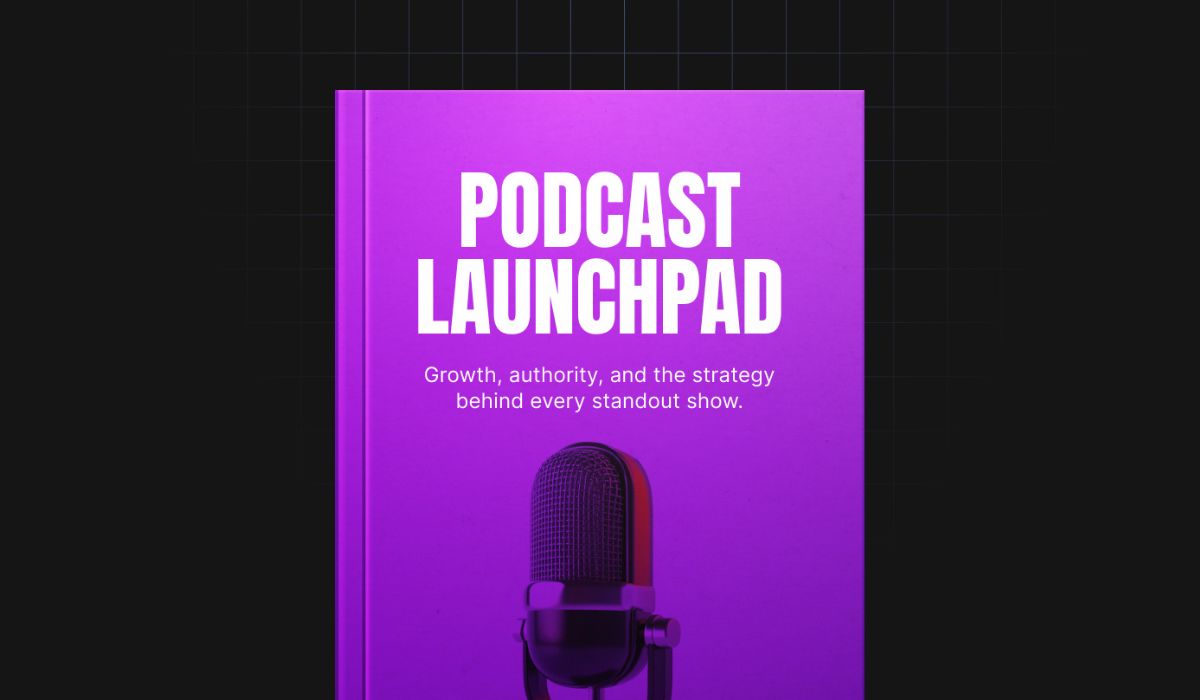

Audio content has emerged as one of the most powerful ways to build a deep, personal connection with an audience. Unlike a blog post or a short social media video, a podcast allows you to spend 30 to 60 minutes directly in your listener’s ear. However, the barrier to entry is no longer just “having a microphone”; it is having a strategic podcast launchpad that ensures your show stands out in a saturated market.
Building a successful podcast requires a blend of creative vision and technical discipline. By following a structured roadmap, you can move from a simple idea to a high-ranking show that drives brand authority and revenue. This guide explores the essential frameworks from our latest ebook to help you launch and scale your podcasting journey.
Finding Your Voice: Niche and Listener Profiling
The first stage of your podcast launchpad is defining exactly who you are speaking to. Many new podcasters make the mistake of being too broad, attempting to reach “everyone interested in business” or “all sports fans.” However, specificity is the secret to rapid growth.
Specifically, you must define your “Ideal Listener.” What are their pain points? What do they listen to during their commute? When you understand your listener’s world, your content becomes a “must-listen” rather than a “maybe.” Furthermore, your core message and positioning must be unique. You should be able to explain in one sentence why your show exists and how it differs from every other podcast in your category.
Building Your Audio Foundation: Gear and Environment
While content is king, poor audio quality is a primary reason why listeners abandon new shows. You do not need a multi-thousand-dollar studio to start, but you do need a solid audio foundation.
Key elements of your technical setup include:
- The Microphone: Invest in a reliable dynamic microphone if you are recording in a non-treated room, as they are more forgiving of background noise.
- Recording Environment: Specifically, you should focus on minimizing echo. Soft surfaces like curtains, rugs, and even closets full of clothes can serve as excellent makeshift recording booths.
- Refining Your Voice: Mastering your vocal presence involves more than just speaking; it involves “paraverbal communication”—the tone, pace, and clarity of your delivery.
Consequently, by optimizing your environment and your gear, you ensure that your message is delivered with professional clarity.
Creating Compelling Audio: The Narrative Structure
Great podcasts are not just “random conversations.” They follow a deliberate narrative structure that keeps the audience engaged from the intro to the outro. Whether you choose a solo deep-dive format or an interview-based show, you must script for the ear.
Specifically, “scripting for the ear” means using shorter sentences, simpler language, and frequent verbal transitions. Furthermore, if you are conducting interviews, your goal is to be a “facilitator” rather than the star. Effective interview techniques involve active listening and asking follow-up questions that dig deeper into the guest’s expertise. Therefore, a well-structured episode feels like a journey for the listener, rather than a disjointed recording.
Publishing with Purpose: The Digital Home
Once your audio is polished and edited, you need a publishing workflow that reaches listeners everywhere. Your podcast launchpad must include a reliable podcast hosting platform. This platform acts as your “digital home,” distributing your show to Apple Podcasts, Spotify, and Google Podcasts via an RSS feed.
To maximize discovery, you should also focus on “Show Notes” and “Podcast SEO.” By including relevant keywords and links in your episode descriptions, you make it easier for search engines to index your content. Consequently, this helps new listeners find your show even if they aren’t searching for your specific brand name.
Promotion and Growth: Building Community
A common myth in podcasting is “build it and they will come.” In reality, you must be your own biggest promoter. Expanding your reach requires a multi-channel approach.
- Social Media Snippets: Create “audiograms” or short video clips from your episodes to share on TikTok and Instagram.
- Community Engagement: Don’t just broadcast; build a community. Reply to listener comments, ask for feedback, and perhaps even create a private group for your “super-fans.”
- Collaborations: Guesting on other podcasts in your niche is one of the most effective podcast launchpad strategies for reaching a warm audience.
Sustaining Growth and Avoiding Burnout
Sustainability is the ultimate goal. The podcasting world is full of “pod-fades”—shows that stop after seven episodes because the creator became overwhelmed. To avoid this, you must build systems. Batch-recording episodes, using templates for show notes, and outsourcing the editing process can save you hours of work each week.
Therefore, treat your podcast as a platform, not just a show. As you refine your process, your show becomes the foundation for deeper audience relationships and diverse revenue opportunities. Stay committed to your niche, listen to your audience, and keep iterating on your craft.
Conclusion
Launching a podcast is a transformative journey that turns you from a content consumer into a market maker. By implementing a strategic podcast launchpad—from defining your niche to mastering your audio and promotion—you build an asset that grows in value over time.
Success comes to those who are consistent and genuinely curious. Start your first recording today, and remember that every episode is a chance to refine your voice and expand your influence. Your audience is waiting to hear what you have to say.