
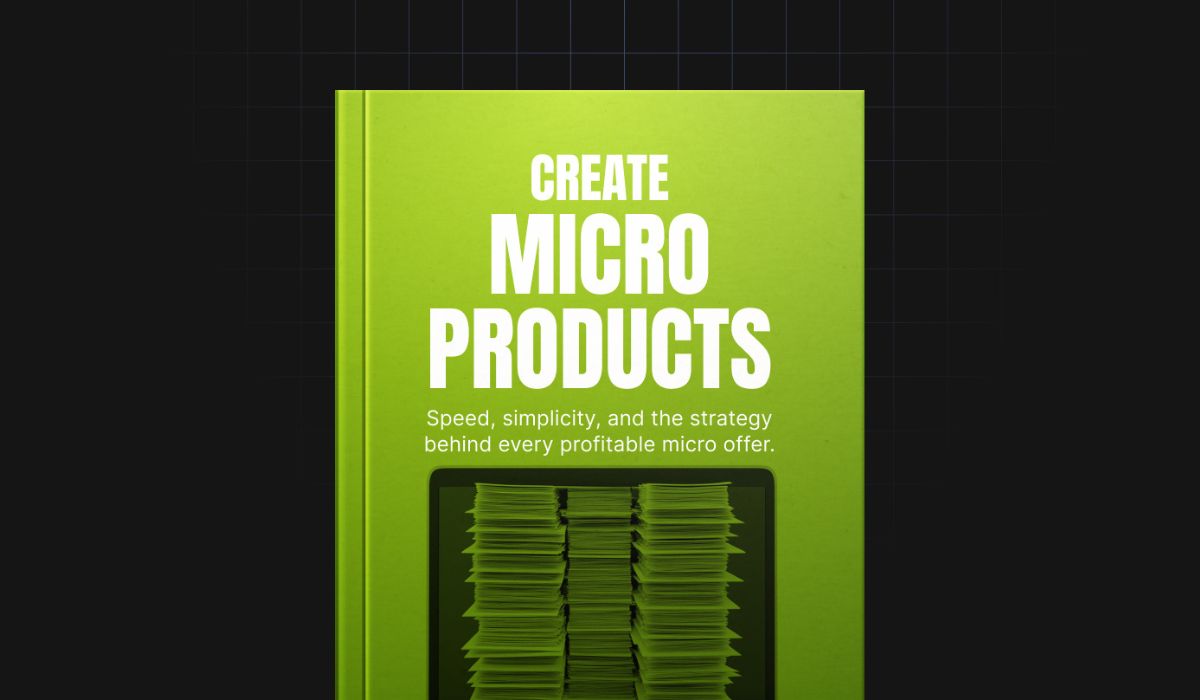

In the modern creator economy, the traditional “big launch” model is becoming a barrier to entry. Many creators spend months developing comprehensive courses or massive programs, only to find that the market has shifted or their audience isn’t ready for a high-ticket investment. To solve this, savvy entrepreneurs have pivoted to a more agile strategy: they create micro products.
A micro product is a high-value, specific solution to a singular problem. Unlike flagship courses, these offers are designed for speed, simplicity, and immediate results. This guide will walk you through the system of building a profitable micro-product ecosystem that scales without the stress of a traditional launch.
What is a Micro Product?
Before you start, you must define the scope of your offer. A micro product is not just a “small” version of a big course; it is a laser-focused tool. Common formats include:
- PDF Checklists and SOPs: Standard Operating Procedures that help users skip the learning curve.
- Mini-Video Trainings: 20–60 minute deep dives into one specific technical skill.
- Templates and Assets: Ready-to-use files like Canva templates, Notion dashboards, or spreadsheet calculators.
Specifically, the goal is to lower the “barrier to entry” for your customers. When you create micro products, you provide an easy “Yes” for your audience, which builds the trust necessary for future, larger purchases.
Ideation Mastery: Finding Pain Points That Pay
The biggest mistake creators make is building what they think is cool rather than what the market needs. To succeed, you must scout for “unmet needs.” Look at your direct messages, comment sections, and industry forums. Furthermore, look for recurring questions that start with “How do I…” or “What tool do you use for…”
Once you identify a recurring pain point, apply the Rapid Validation Framework. Before you spend a single hour building, ask yourself:
- Is this problem urgent for my audience?
- Can I solve it in under 60 minutes of consumption time?
- Are people already paying for similar (but perhaps more complex) solutions elsewhere?
The Lean Creation Formula: The 4-D Method
To maintain speed, you must follow a repeatable production workflow. The ebook highlights the 4-D Method as the gold standard for lean creation.
1. Define
Clearly state the transformation. “This product will help you [Result] in [Timeframe].” Without a clear definition, the project will suffer from “scope creep,” becoming too large and complicated.
2. Design
Map out the bare essentials. What is the minimum amount of information the user needs to get the result? Consequently, you should remove any “nice-to-have” information that doesn’t directly contribute to the immediate win.
3. Develop
Set a “creation sprint” of 24–48 hours. Use tools you already know. If you are comfortable with Google Docs, turn your SOP into a polished PDF. If you are great on camera, record a quick loom video. Speed is your competitive advantage here.
4. Deliver
Choose a lightweight delivery platform. You don’t need a complex learning management system (LMS) to create micro products. A simple checkout page and an automated email with a download link are often enough to get started.
Pricing with Purpose: The Psychology of Micro Offers
Pricing is a strategic lever. For micro products, you are generally looking at the $7 to $97 range. This “impulse-buy” pricing reduces the friction of the decision-making process.
However, do not mistake low price for low value. Your micro product should feel like a “steal.” If the customer feels they received $500 worth of value for a $27 investment, they are significantly more likely to buy your next offer. Additionally, consider “Price Stacking”—where you offer a base product with a small, high-value “order bump” at checkout to increase your average order value.
Building the Product Ecosystem
One micro product is a revenue event; a stack of micro products is a business. As you create micro products, you should see them as “stepping stones” in a larger customer journey.
For example, a $17 template might lead to a $47 mini-course, which eventually leads to a $500 coaching program. By systematizing your creation process, you can release a new micro offer every month. This consistent output keeps your brand fresh and provides multiple entry points for different segments of your audience.
Conclusion: Start Small to Win Big
The journey to a profitable business doesn’t require a 100-page business plan or a $10,000 production budget. It starts with a single, high-quality solution to a real problem. When you create micro products, you are not just selling a file; you are building a relationship based on proven results.
Start today by identifying one process you’ve mastered and package it into a lean, effective micro offer. Your audience is waiting for a shortcut—be the one to provide it.